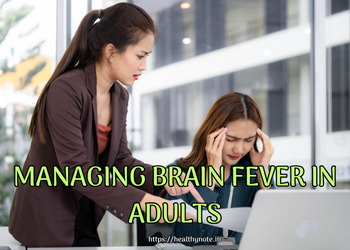
Managing Brain Fever in Adults – Brain fever is a serious inflammation of the brain or its surrounding membranes that encompasses conditions known as encephalitis or meningitis. In adults, it develops from bacterial, viral, or fungal infections that either travel through the bloodstream or infect nearby organs. Management starts with early recognition, medical therapy, and home support as recovery occurs.
Understanding Symptoms of Brain Fever
Managing Brain Fever in Adults – Understanding Brain Fever in Adults
Managing Brain Fever in Adults – The term “brain fever” is more than just a fever; it directly impacts the membranes surrounding or tissues of the brain.
A brain fever may develop in an adult as a result of an untreated ear, sinus, or throat infection; an unrelated viral infection (such as herpes, measles, or Japanese encephalitis); bacterial infections transmitting to the central nervous system from another area of the body; or a weakness of the immune system from chronic illness or stress.
Knowing the origins of the fever allows the doctor to provide better treatment options and potentially prevent the complications of swelling or damage to the nerves.
Managing Brain Fever in Adults – Common Symptoms of Brain Fever in Adults
Symptoms generally look like flu but progressive quickly:
- High fever for a prolonged period
- Severe headache
- Pain in neck or stiffness forward bending
- Nausea and recurrent vomiting
- Sensitivity to light and noise
- Confusion, irritability, or difficulty concentrating
- Seizures or fainting in severe cases
If you see any combination of symptoms stated above seek help immediately.
Medical Management and Treatment
Therapeutic strategies are based on the underlying process:
- Antiviral or antibiotic treatment – Individuals can be treated with IV antibiotics/antivirals for the purpose of decreasing infection.
- Corticosteroids – Used to decrease brain inflammation and brain pressure.
- Anticonvulsants – If the patient presents with seizures
- Hospital observation – Hospital observation to monitor stable vital (respiration, brain function).
- Timely intervention (24-48 hours) improves odds for full recovery.
Home and Supportive Care
Once settled into home management, they are key to healing:
- Rest is key – Fatigue can last for weeks, even after the treatment is over.
- Hydration is key – Drink fluids such as water, soups, or electrolyte drinks.
- Eat light, nutritious meals – Eat fruits, vegetables, and protein to rebuild strength.
- Lessen brightness or noise – These can aggravate headache or sensitivity.
- Has a follow-up to support brain and nerve functioning on a regular basis!.
Managing Brain Fever in Adults – Prevention Tips
- Stay up to date on immunizations, including meningococcal and Japanese encephalitis vaccines.
- Treat ear infections, throat infections, or sinus infections quickly.
- Practice good hygiene and try not to be around sick people.
Managing Brain Fever in Adults – Conclusion
Managing Brain Fever in Adults – Diligent care of brain fever in adults involves urgent medical care and management of recovery at home. When brain fever warning is identified early on, we follow and get treated appropriately, and we are encouraged to create a healthy and low-stress environment, then recovery is easier. Most adults can have good recovery with care and attention and will have no subsequent complications.