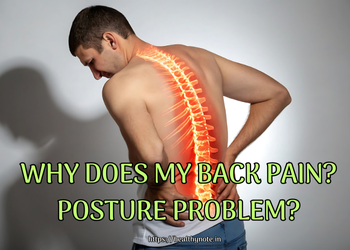
Why does my back pain? Posture problem?: There are moments when the repossession you take up, either sitting or standing, appears to have no impact whatsoever except for your body, a very slight discomfort is already surfacing, a discomfort that is masked by your position. You may briefly uplift your body, alter your shoulder position, or pretend to do a neck stretch, but the discomfort somehow gets back to you. This pain is usually mild and not very noticeable, it could be just a lingering low burning, a profound achiness, or a weight shifting around your back and shoulders. Most people try to ignore this hidden tension until it eventually develops into an intermittent pain that is always there. Once you identify what is causing your bad posture, you will be able to understand what your body has been through silently.
Read Al so : How to improve gut health?
Why bad postures lead to discomfort?
Posture is not just a question of beauty; it is also a way that the muscles, bones, and joints support a person throughout the day. When the alignment is even slightly off, the body has to exhaust itself to maintain its standing position, which, in turn, results in the very hard to lose symptoms of strain, tension, and pain.
Some common posture related problems
- Hunching over screens or phones
- Long hours of sitting without lumbar support
- Bags on one shoulder
- Leaning forward when standing or walking
- Upper back and core muscles that are not strong enough
- Sleeping in uncomfortable positions
These bad habits gradually cause your body to lose its balance and you won’t even notice it happening.

Hidden Signs Your Posture Is Hurting You
Posture-related pain is not always obvious. It typically presents in subtle and perplexing ways.
Some of the signs you may experience are:
- Tightness in the upper back or between the shoulder blades
- Neck stiffness upon waking up
- A feeling of heaviness in the lower back
- Shoulder tension leading to headaches
- An exhausted feeling in the chest area, as if it is being slumped or caved in
- A slight numbness in the arms or hands
All of these are signals from your body that your posture is not right and that it is leading to misalignment and pressure.
Remedies to Relieve the Pain in Your Posture Area
You won’t have to do hard workouts or take complicated treatments. Usually, just changing some habits is enough for the pain caused by bad posture to be reduced significantly.
Suggestions:
- Have your back straight against the chair and your feet on the ground.
- Gently roll your shoulders back to release some of the stress.
- Do chest stretching to relieve the tight and tired muscles.
- Have short standing or walking breaks throughout the day.
- Get a firm pillow that will provide good support for your neck.
- Adjust the height of your monitor to be at eye level.
These little adjustments in no time will be sufficient to release the pressure rapidly.
Gentle Practices That Restore Your Alignment
Gradually your body will relearn to occupy the correct posture through the consistency of the practice.
Among the ways to do it are:
- Strengthening of core and upper back
- Mindful sitting practice, not stiff but steady
- Keeping shoulders relaxed rather than raised
- Hip stretching for lower-back pull reduction
- Taking deep breaths that expand the chest
When you are patient, your body will be in the right place.
Gentle Practices That Restore Your Alignment
Gradually your body will relearn to occupy the correct posture through the consistency of the practice.
Among the ways to do it are:
- Strengthening of core and upper back
- Mindful sitting practice, not stiff but steady
- Keeping shoulders relaxed rather than raised
- Hip stretching for lower-back pull reduction
- Taking deep breaths that expand the chest
When you are patient, your body will be in the right place.
Conclusion
The discomfort that comes from your posture is not something that just happened by accident, rather it is a signal sent by your body that it needs balance and care. Through the application of conscious habits, soft stretching, optimal alignment, and short intervals of relaxation during the day, the discomfort can melt away and the body can recover its ease. The recovery process starts when you no longer avoid the subtle pains and when you start to support the posture that is with you during every moment of your life.